- Lifestyle
The velvets, damasks and silks that dressed Venice

In the warehouses overlooking the Grand Canal, between sacks of pepper and crates of alum, skeins of raw silk once arrived from the Levant.
For centuries, Venetian textiles were among the richest sources of wealth for the Serenissima: Venice imported silk from the East, had it spun, dyed and woven in its own workshops, and sold it across Europe as velvets, damasks and cloths woven with gold.
Merchants, dyers and weavers formed a supply chain governed by guilds and strict laws, reaching from the fondaci, the merchant warehouses of Rialto, to the shops opening towards San Marco. Part of that knowledge has never been lost: eighteenth-century looms still work in the city, and the dry knock of their wooden frames speaks of the same patience as before.
Venice and the Silk Road, when fabrics arrived from the East
Before being transformed into the magnificent textiles that made the city famous, these precious fabrics were the fruit of long and fascinating journeys.
Venice maintained crucial commercial ties with Constantinople and the markets of the Eastern Mediterranean — the gateways to an exotic world through which spices, ivory, and the coveted silk trade flowed. The celebrated travel accounts of Marco Polo also fueled the Venetian imagination regarding the fabulous East and its boundless riches.
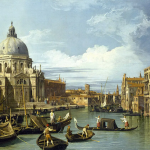
Canaletto, The Entrance to the Grand Canal with the Customs House and the Church of the Salute (c. 1730; Houston, Museum of Fine Arts)
In the city, processing these raw materials was entrusted to highly specialized artisans known as testori de pani de seda (silk cloth weavers) and, for the most prestigious commissions, samiteri — a term linked to precious fabrics of Byzantine tradition. Theirs was a refined art requiring years of apprenticeship and deep technical mastery.
Between the 14th century and subsequent eras, through cultural exchanges and the arrival of foreign craftspeople, Venice established a unique manufacturing legacy defined by complexity and decorative richness, where floral and animal motifs intertwined in unmistakable Oriental styles.
Yet, to understand how these extraordinary goods reached the beating heart of the city, one must trace the urban route that led them from the shipping docks straight to the most elegant shopfronts.
The Mercerie of Venice, a street of shops, silks and trade
To retrace the path of these merchant goods in medieval Venice today, one need only walk along the Mercerie Venice — the intricate network of streets connecting the commercial hub of Rialto to the political and spiritual center of St. Mark’s Square. It remains a short yet strategically vital itinerary.
Even in the Middle Ages, this corridor was packed with shops and trading posts dedicated to all manner of luxury items. Venetian silk, fine accessories, and precious objects passed from hand to hand as merchants, nobles, and travelers bustling through the streets at all hours.
The economic and diplomatic importance of this area was so great that the Mercerie became one of the very first streets in the city to be paved with brick as early as the 13th century.
However, this was more than mere retail trade. The shops of the Mercerie represented the vital bridge between foreign imports and local artisan craftsmanship. From this close synergy between trade, creativity, and craftsmanship emerged Venice’s distinct textile identity, destined to dress not only its citizens, but the very architecture of the city itself.
Silk in the Venice of the Doges: clothing, furnishings and symbols of prestige
In the Venice of the Doges, wearing a precious fabric was a visual language unto itself: the quality of the silk, the dramatic texture of Venetian velvet, and the inclusion of gold or silver threads immediately communicated the influence and social rank of the wearer.


Yet, these textiles were not reserved solely for aristocratic wardrobes. Velvets, brocades, and damasks crossed the thresholds of historic palazzi to become an integral part of their interiors: lining walls, enriching upholstery, and evoking the solemn atmosphere typical of Venetian state rooms. Fabric thus transformed into architecture, theatrical backdrop, and tangible proof of Venetian taste.
This same reverence for noble materials and decorative detail has reached us intact. One can still feel it today inside the Caffè Florian’s historic Rooms, where plush red velvet benches, classical paintings, and carved wooden frames dialogue with one another, preserving the timeless elegance of the Serenissima.
The historic weaving mills of Venice, a craft that has outlasted time
The heritage of Venetian textiles does not belong solely to museums or history books. Centuries-old techniques continue to live on thanks to visionary craft houses that preserve traditional gestures, maintaining historic handlooms and complex weaving processes.
Among these legendary historic Venetian weaving mills, Tessitura Luigi Bevilacqua stands out, with a family heritage dating back to the 15th century. Founded at its current location in 1875, the mill recovered original looms and machinery from the Serenissima’s historic Silk School. Today, in its canal-side workshop, master weavers still handcraft velvets and damasks of rare beauty, including the famous soprarizzo velvet, renowned for its hand-cut pile that creates multi-dimensional relief effects across the fabric’s surface.
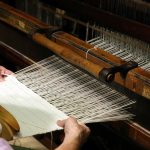
The precious manufacturing technique of weaving.
Equally legendary in Venice is Tessitura Rubelli, founded in the second half of the 19th century. From its inception, Rubelli went beyond simple production to interpret fabric as an architectural element — never an isolated detail, but a dynamic component designed to interact with space, texture, and light.
The creations of both Bevilacqua and Rubelli require months of patience, millimeter precision, and technical mastery passed down through generations. In a fast-paced world, these workshops remind us that the ultimate value of a textile lies in the soul and time dedicated to its creation.
Silk today and the Venetian spirit of Florian accessories
This rich textile tradition and love for detail continue to evolve into objects designed for modern living. In the Florian Fashion collection, this profound link to the city’s history translates into a refined accessory line featuring scarves and bandanas made from 100% Made in Italy silk twill.
The creative starting point is a decorative motif preserved inside the Caffè itself: a rich floral frieze taken from the ornaments of the Sala del Senato (Senate Room). A design created to embellish a historic room is thus reinterpreted on lightweight, versatile accessories ready for everyday wear.
The Florian silk scarf revisits a timeless wardrobe staple, immortalized by style icons like Audrey Hepburn and Grace Kelly. Offered in six colorways, its soft and luminous silk twill adds an elegant accent to any outfit.
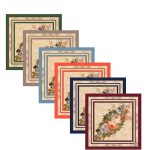
The beautiful shades of the Florian refined silk scarf.
For those who prefer playful versatility, the silk bandana offers endless styling possibilities: worn as a headband, tied around the wrist, or knotted to the handle of a handbag.



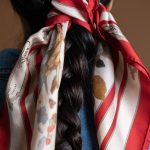
Both creations celebrate premium quality silk and Italian craftsmanship through a design that tells the decorative story of Caffè Florian, allowing you to carry a piece of true Venetian elegance wherever you go.

